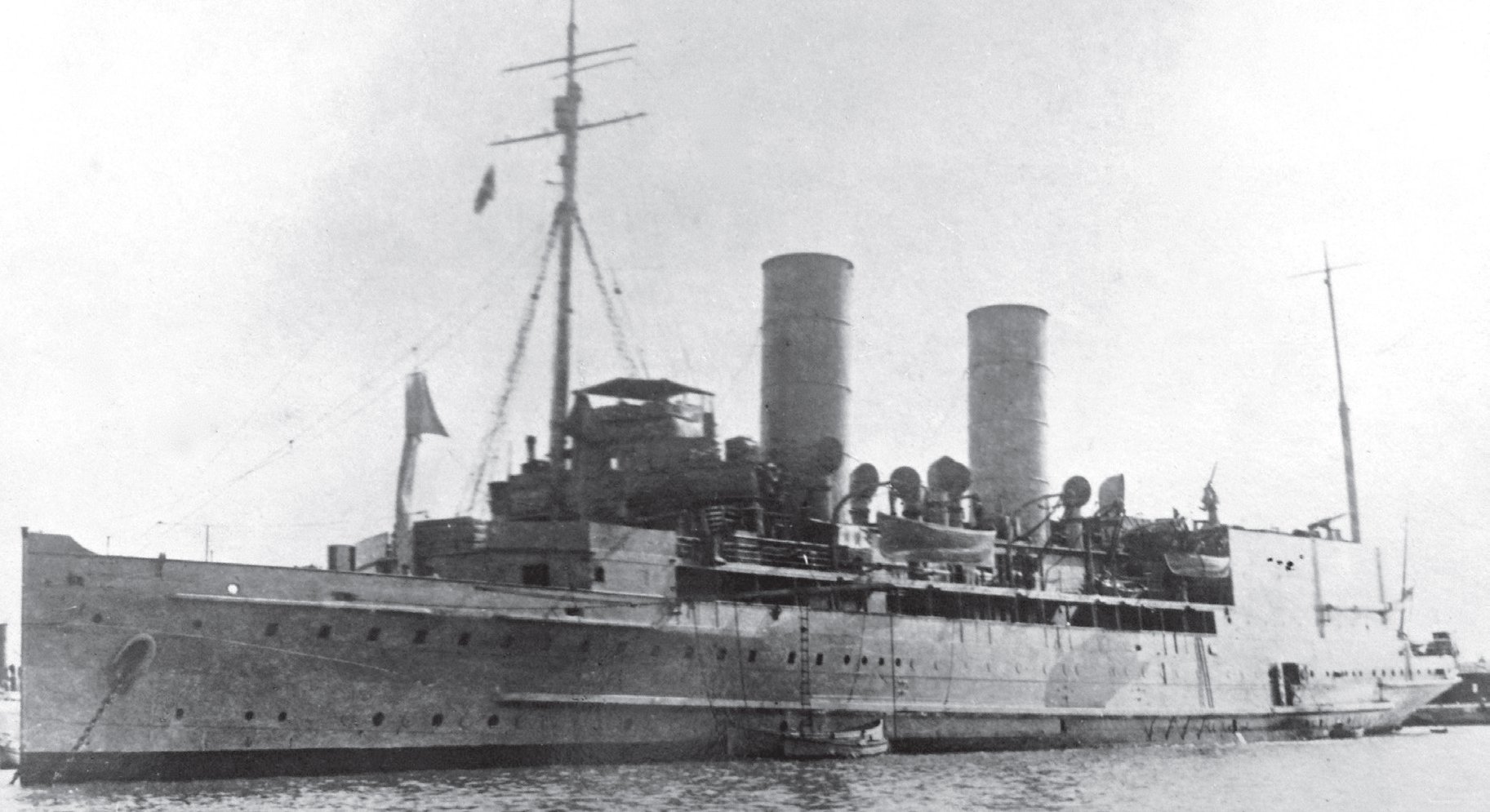
Another fast vessel, the Isle of Man packet Ben-My-Chree, had been purchased and was being converted into what would become the model for the
Royal Navy’s seaplane carriers. A large rigid hangar was added aft, and the forecastle had a launching platform installed to allow seaplanes to launch
from the deck. Ben-My-Chree’s launch platform proved unsatisfactory and was subsequently removed. The rigid hangar worked so well that all three
original conversions had their canvas shelters replaced with a rigid hangar aft.
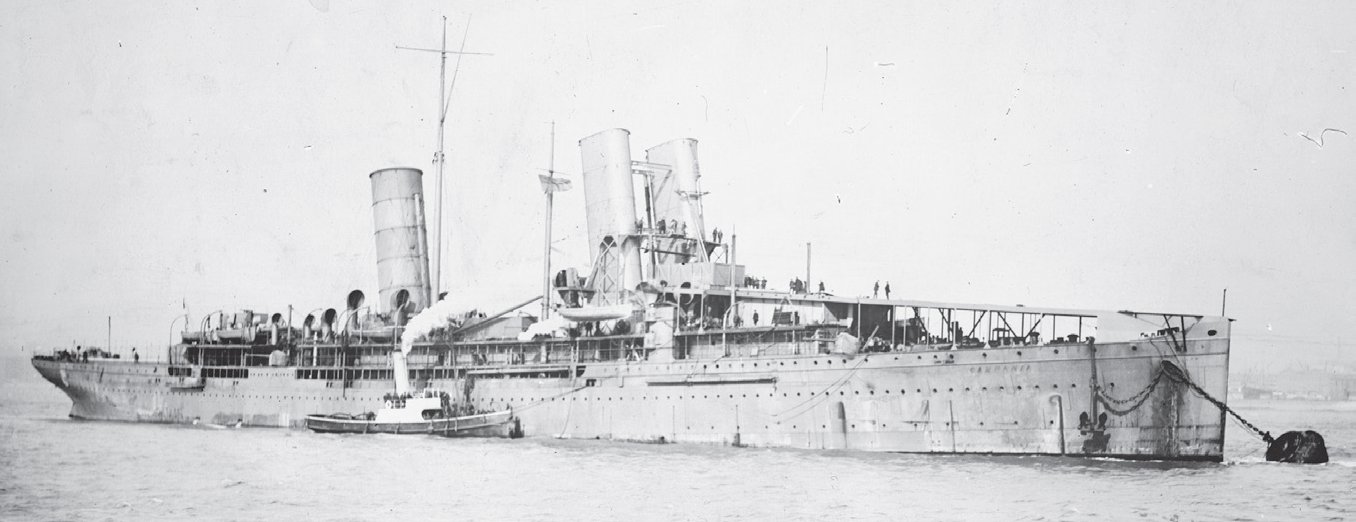
A more extreme conversion was done on an old ocean liner, Campania. The ship, awaiting scrapping when the war started, was instead converted to
a seaplane carrier. A launching ramp forward was installed and a large hangar, capable of carrying 12 aircraft aft. Operation experience proved the launching ramp was too short. It was lengthened, starting aft of the forward funnel. The funnel was split, with aircraft rolling between the funnels on take-off. A floatplane was designed to operate from Campania, the Fairey F.17 Campania, which was the first aircraft designed to operate off a specific ship.
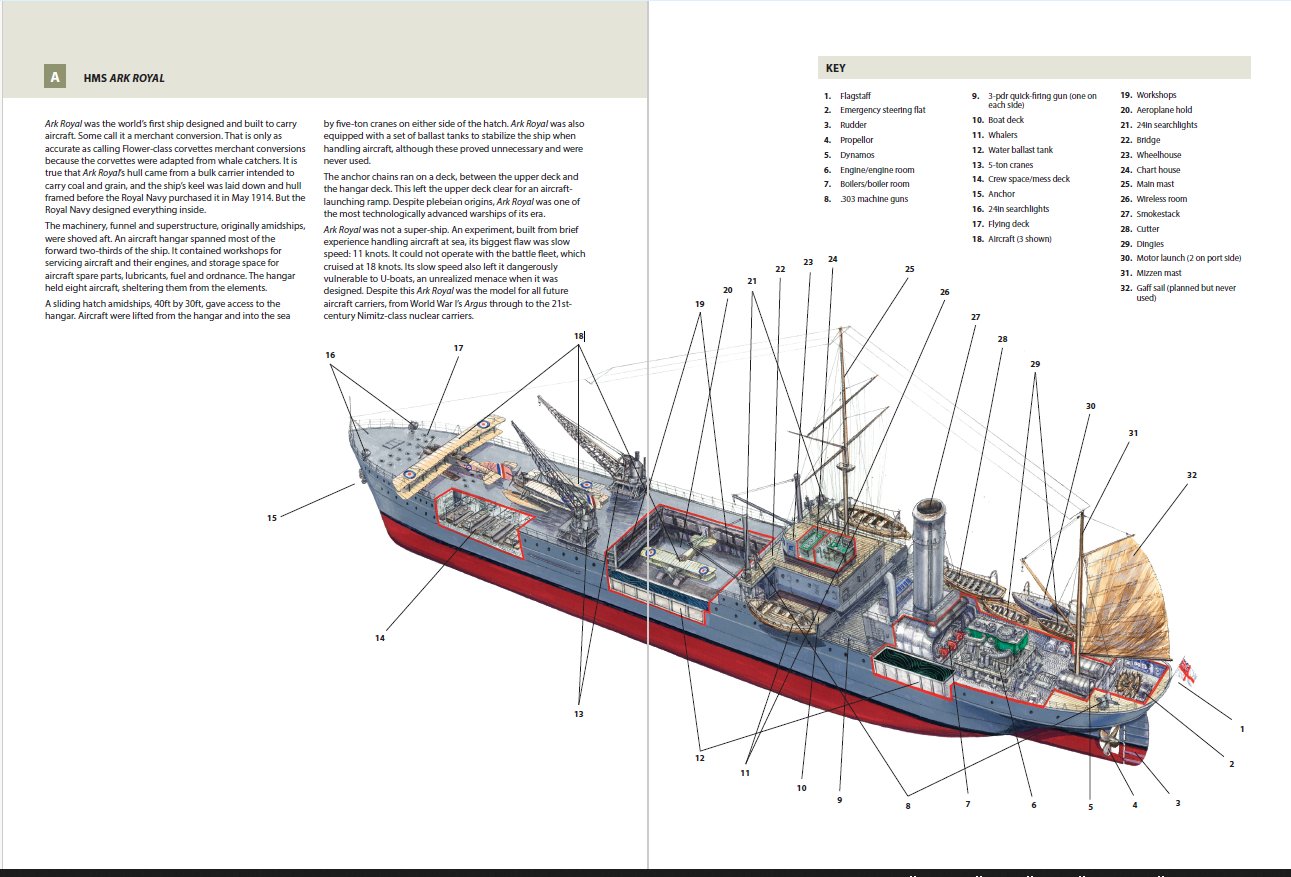
HMS Ark Royal, the first ship designed to carry aircraft. Experiments led the Royal Navy to construct a purpose-built seaplane carrier. In May 1914 an incomplete merchant hull was purchased. It had been framed, but was otherwise unfinished. Construction ceased until the Royal Navy delivered a plan for its dream aviation ship. What resulted was Ark Royal. It had a large internal hangar, a hatch large enough to accommodate an aircraft, as well as all facilities associated with modern carriers: machine shops, custom fuel and stores storage, and an elaborate ballasting system to keep the ship level when handling aircraft. The anchor chains and ground tackle were placed below the upper deck allowing a flight deck to be added (although it never was). The ship had one flaw, but it proved crippling – a top speed of 11 knots. The error was understandable. No one realized the threat submarines posed to slow-moving vessels when Ark Royal was designed. But it was too slow to sail with a battle fleet so, despite its advanced features, Ark Royal was doomed to serve in secondary theatres, operating from harbour.